DG Ingeniería
DG Ingeniería Engineering Intelligence
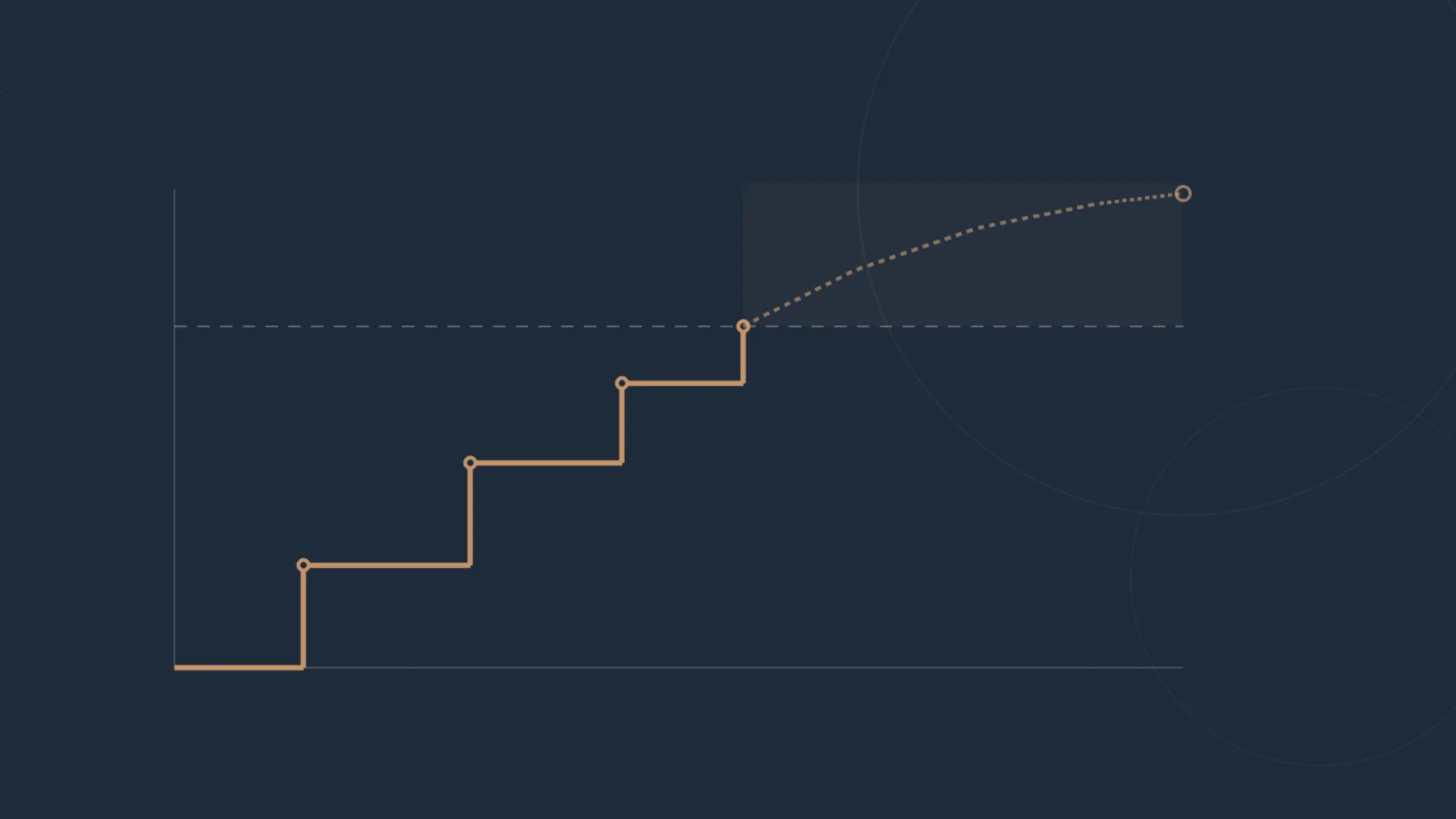
Stepped load curve rising within a published procedure and continuing as a dotted line above its applicability threshold
Insights · Energy and site decisions

Paraguay electricity costs
— what the tariff doesn’t tell you

Low-cost power is real. But three factors that story leaves out often determine whether a project gets built — and when.

Insight #3 August 19, 2026 6 min read

Almost every conversation about investing in Paraguay opens the same way: abundant hydroelectric power, among the lowest industrial tariffs in the region, a country that exports far more electricity than it consumes.

All of that is accurate. It is also where most analyses stop.

The three things that come after are the ones that decide whether a capital-intensive project gets built, and on what timetable. These are not arguments against Paraguay. They are inputs an investment committee should incorporate into diligence, sequencing and risk allocation before signing.

The tariff leaves out three separate questions: what the cost becomes in your reporting currency, whether the required power can reach the site on time, and how the commercial terms are actually established. What follows explains what each of those gaps does to the project schedule and to the site decision.

One

The tariff is priced in guaraníes. Your model is not.

Paraguay’s electricity tariff is published in guaraníes per kilowatt-hour. Your investment committee thinks in dollars. That mismatch matters.

A tariff schedule can remain unchanged for two years while the dollar cost of the same electricity moves materially in either direction, solely because the exchange rate changed. No tariff change is announced, because none occurred: only its dollar equivalent moved.

The practical consequence is that a dollar-per-megawatt-hour figure quoted from a report is a snapshot of an exchange rate on a particular date, not a fixed property of the country. If you are modeling twenty years of power purchases, the currency of denomination belongs in the sensitivity analysis alongside the tariff itself.

As of August 19, 2026, the Central Bank of Paraguay’s Mercado Fluctuante con Clientes No Financieros series closed at 6,018.60 buy / 6,024.03 sell guaraníes to the dollar. That is the series to cite in a model; check it for whatever date yours uses.

Two

The constraint is not generation. It is transmission.

The surplus is real: Paraguay consumes a fraction of what it produces and exports the rest. From that, a reasonable person concludes that power is available.

Generation and delivery are different questions. The capacity that matters to a project is the capacity that can reach your site, at your voltage, with the redundancy your operation requires. That is a transmission and substation question, and it is where the system is tight — tight enough that the country has experienced supply events despite the surplus.

So the number that governs a schedule is not the installed capacity of a nearby substation. It is the firm capacity that can actually be assigned to a private offtaker at that node, and the time it takes to make it available. That interval is the project’s time to power, and it can shift the investment date.

Availability is only half of the grid question. The other half is which interconnection works are required, who funds and owns them, and what redundancy the approved configuration actually provides. Those three answers can move a capital budget as much as the tariff does.

Three

For a large load, the tariff is not a number. It is a contract.

Below a certain size, you look up your tariff. Above it, you negotiate one.

Paraguay’s framework for large energy-intensive loads — the category a data center, a large industrial plant or a similar load falls into — works through a special contract with the utility. The published schedule creates the category and then refers to the contract. Which means the answer to “what will power cost me” is not something you can look up. It is something you establish, with terms, conditions and a duration attached.

The implication is operational: the utility and the project’s commercial team need to enter diligence earlier than they would for a published, standard tariff.

The clock nobody mentions

The published procedure has a ceiling

There is a published administrative procedure for connecting a large load — ANDE’s PCO-19, for demand above 41.58 kW — with defined steps and response times. Two provisions in it materially affect project sequencing.

The first is that it contains expiration deadlines. A submission that is not followed through within a defined window lapses, and the process restarts. That makes the sequence of your decisions matter as much as the decisions themselves: filing early, just to have the answer, can mean filing twice.

The second has larger consequences. The published procedure has an upper applicability threshold. Above it, the procedure as written does not apply — and as of August 19, 2026, we found no equivalent published timetable for projects above that threshold. For a project in the tens or hundreds of megawatts, there is no calendar to look up.

For a large load in Paraguay, time-to-power is not something you consult. It is something you construct.

A note on dates

The regulatory framework is changing, and that matters more than usual

During 2026, Paraguay’s framework for energy-intensive investment has changed repeatedly, with regimes introduced and withdrawn within the same year. The decrees governing the so-called industrias convergentes — a category that expressly covered data centers, artificial intelligence and high-performance computing — were issued in January 2026 and repealed on 9 June 2026.

The consequence for a foreign investor is specific and unglamorous: any statement about tariff, regime or incentive has to carry the date on which it was verified. A well-written analysis published eighteen months ago can describe something that no longer exists, and it will not announce that it has expired.

What this changes

Screen the site before you buy it

Most site-selection processes follow the same sequence: find the land, then check the power. In Paraguay, for an energy-intensive use, that order is expensive.

The three filters that decide a site — firm power, water and cooling, redundant fiber — can all be screened preliminarily, often far enough to eliminate weak candidates before commissioning fieldwork or signing a purchase option. Flood exposure and bearing capacity then narrow the usable area further.

Screening first is not caution. It is the cheapest stage at which a weak site can be rejected, before acquisition and fieldwork costs start to accumulate.

Scope

Where our scope ends — and the developer’s begins

The division of responsibilities should be clear from the outset.

  • We assess the site and develop the civil and site engineering: terrain surveys and models, hydrology and flood exposure, earthworks and platforms, access for heavy transport, net usable area, and the technical case and roadmap through the institutions.
  • We coordinate work that must be led and signed off by specialists: geotechnical campaigns, high-voltage electrical engineering, cooling design, environmental impact assessment.
  • Commercial negotiation sits outside the engineering scope. Negotiating power and tariff is the developer’s own. The utility’s applicable requirements determine which project entity must submit and sign the formal application. We prepare the supporting technical case.
Frequently asked

What people usually ask us

Is electricity really cheap in Paraguay?

Yes, and the surplus is real. For an investment model, two qualifications change how that figure should be used. The tariff is denominated in guaraníes, so its dollar equivalent moves with the exchange rate even when the schedule is unchanged. And for large energy-intensive loads the applicable figure is not published: it is established through a special contract with the utility. Treat any dollar-per-megawatt-hour figure quoted from a report as a reading on a date, and record which exchange rate series it used.

What decides whether a site in Paraguay works for an energy-intensive project?

Three filters, and none of them is the size of the plot. Firm power that can actually be assigned to a private offtaker at that node, and the time required to make it available. Water availability, the cooling strategy it permits and the resulting cost. And redundant fiber on physically diverse routes. Flood exposure and bearing capacity then narrow the usable area further. All three can be screened preliminarily, often far enough to eliminate weak candidates before fieldwork is commissioned.

Who pays for the interconnection works, and who owns them?

This is the question most often missing from an early model, and it can move a capital budget as much as the tariff does. Connecting a large load usually requires works on the network — a bay, a line section, a substation upgrade — and three things have to be established for each: which works the utility requires, who funds and executes them, and who owns and operates them afterwards. The redundancy the approved configuration actually delivers is a fourth. None of these can be answered generically; they follow from the point of connection and the load profile.

How should an investment committee sequence the early work?

Screen before you commit. The three filters that can eliminate a site — firm power and its timeline, water and cooling, redundant fiber — are the cheapest checks in the sequence: the stage at which a weak site can still be rejected before acquisition and fieldwork costs accumulate. Land acquisition and field campaigns come after, not before. And because the framework has been under active revision through 2026, with regimes introduced and withdrawn inside the same year, any input carried into the model should record the date on which it was verified. This article reflects the position as of August 19, 2026.

Assessing a site in Paraguay?

Tell us what you are evaluating — site, power, water or permitting — and we can identify what must be verified, who must verify it, and which dependencies will drive the schedule.